All episodes

 30 Years of PHP: Guarding the Core Infrastructure

30 Years of PHP: Guarding the Core Infrastructure

55m 33s

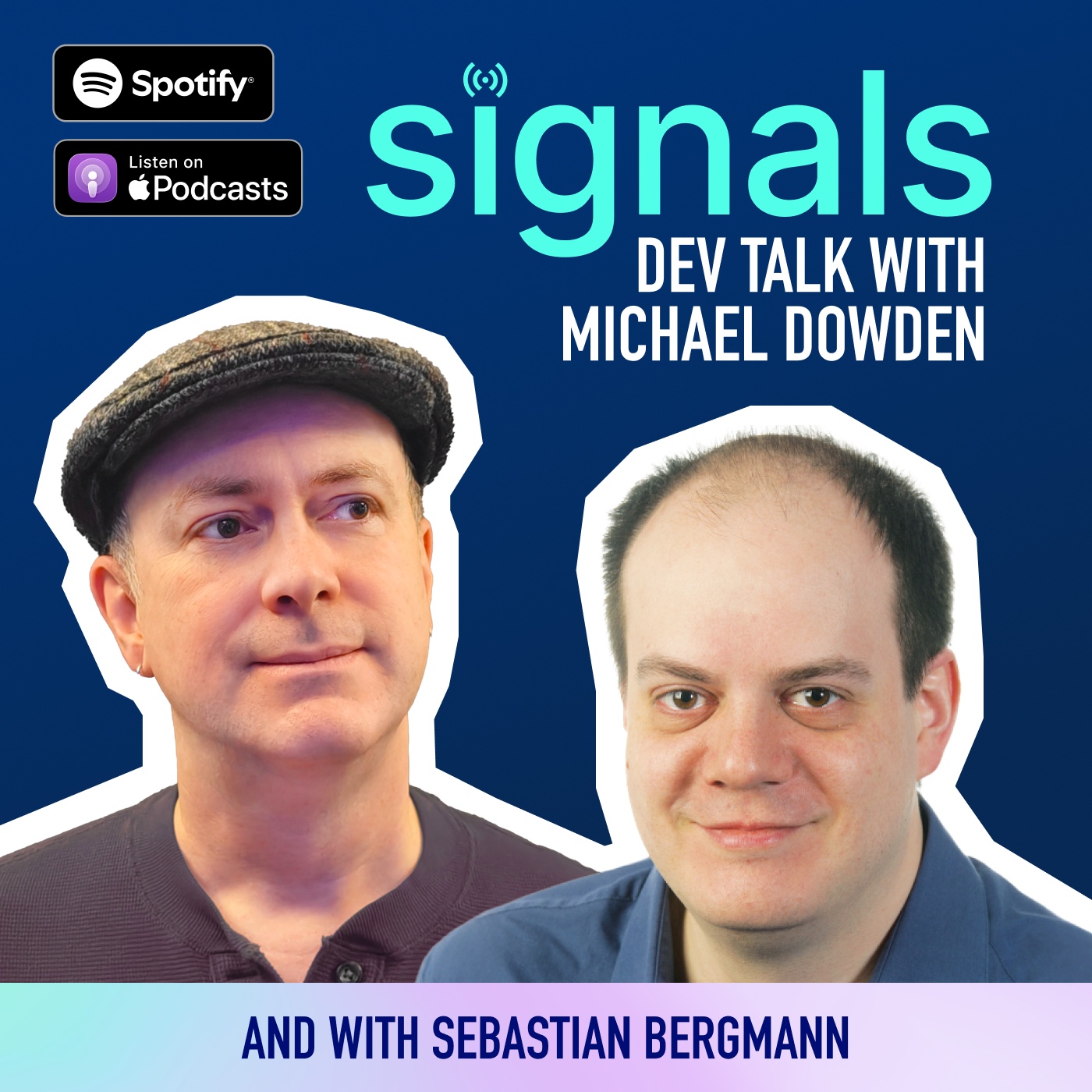
In this episode, host Michael Dowden sits down with Sebastian Bergmann, the creator of PHPUnit, to discuss the evolving landscape of open-source software development. Bergmann shares details on upcoming features in PHPUnit 13.3 designed to tackle flaky tests. The conversation delves deeply into modern supply chain security, highlighting recent changes in Composer's dependency handling and the necessity of automated dependency hygiene. Bergmann also addresses the dual-edged sword of AI in engineering—explaining how AI tools are driving an onslaught of security reports while warning against the dangers of developer "de-skilling." Finally, they examine the long-term financial sustainability of open-source projects and...

The Agentic Enterprise: Bridging the Gap Between API Management and AI Innovation

The Agentic Enterprise: Bridging the Gap Between API Management and AI Innovation

49m 40s

In this episode, host Michael Dowen sits down with API strategy expert Dr. Matthias Biehl to discuss how the Model Context Protocol (MCP) serves as the missing link connecting generic Large Language Models (LLMs) to real-time, proprietary enterprise data and systems. The discussion explores the architectural shift from passive LLMs to active, real-time AI agents that are capable of interacting with their environments and collaborating via Agent-to-Agent (A2A) protocols. Dr. Biehl outlines how enterprises can seamlessly upgrade their existing REST API investments—specifically process and context APIs—into MCP interfaces without massive technical reengineering. Crucially, the episode highlights how organizations can overcome...

Balancing LLMs, Computer Vision, and Engineering Trade-offs

Balancing LLMs, Computer Vision, and Engineering Trade-offs

52m 46s

In this live podcast episode, host Michael Dowden sits down with Pieter Buteneers, CTO of the legal tech workspace Emma, and Martin Stypinski, founder of the computer vision consulting firm VMG. The conversation bridges two distinct areas of artificial intelligence: highly deterministic, traditional computer vision applications and the rapidly evolving world of Large Language Models (LLMs). Together, they argue that AI is an accelerator rather than a solution in itself. The true value of any technology company lies in a deep understanding of the customer's problem and the user experience built around solving it.

The Shift from Kubernetes and DevOps to Platform Engineering

The Shift from Kubernetes and DevOps to Platform Engineering

38m 24s

In this episode, Michael Dowden sits down with Google Developer Advocate Abdellfetah Sghiouar to explore the current state and history of Kubernetes, tracing its 11-year evolution from a Google open-source project to a mature industry standard. The discussion delves into the rise of platform engineering and internal development platforms (IDPs), which aim to provide developers with higher-level abstractions that hide underlying infrastructure complexities. Looking ahead, they analyze emerging trends such as the swing between cloud and on-premise infrastructure, the growth of edge computing, and the integration of AI into development workflows.

Not My Job/No Need to Know

Not My Job/No Need to Know

31m 21s

In this episode, host Michael Dowden sits down with Alistair Cockburn, co-author of The Agile Manifesto, to discuss modern software design and its evolution alongside Large Language Models (LLMs). Cockburn explains that applying the "genius" of human bureaucracies, specifically the concepts of "not my job" and "no need to know," is the most effective way to define software responsibilities and manage the rapid, often messy, code generation of AI agents. By framing software components as specialized entities in a bureaucracy, developers can establish a clear gradient to judge design quality and detect design drift as systems evolve.

AIOps: Smarter Systems or Bigger Risks?

AIOps: Smarter Systems or Bigger Risks?

47m 49s

In this live podcast episode, host Michael Dowden sits down with Christian Schneider and Torsten Köster to explore the impact of artificial intelligence on software operations. They distinguish between AI for Ops (using AI to enhance day-to-day analytics) and Ops for AI (the specialized observability required to monitor non-deterministic AI applications). The conversation also covers the architectural principles, observability requirements, and security controls needed to safely deploy AI at scale, along with the growing role of AI in software development and the future of IT operations.

 The Human Core of Engineering in the Age of AI

The Human Core of Engineering in the Age of AI

58m 5s

In this episode, our experts address a deceptively complex question: What is AI actually doing to the software industry? Not as a tool or a trend, but as an accelerant. They dig into why agility seems strangely quiet, whether the software crisis was ever really solved, and what all these rapid changes mean for the way we build and think about software.

Making Accessibility the New Standard in an AI-Driven World

Making Accessibility the New Standard in an AI-Driven World

48m 24s

In this episode, host Michael Dowden sits down with Jemima Abu, a senior product engineer, to explore how web accessibility is not just an optional business requirement but a fundamental responsibility to build useful products for all users. They unpack the dual role of AI, illustrating how it can inherit human biases to produce flawed code while also serving as a powerful tool for accelerating essential tasks such as alt-text generation and transcript proofreading. Ultimately, the episode calls for a mindset shift toward intentionality, urging developers to leverage new technologies to create more inclusive digital experiences that can stand the...

Node.js: Moving Too Fast for Corporations, but Too Slow for Developers

Node.js: Moving Too Fast for Corporations, but Too Slow for Developers

60m 41s

The episode focuses on the operational and security landscape of Node.js. Marco and Rafael explain that Node.js development is driven by volunteers rather than a formal product roadmap, with significant time dedicated to security releases and triaging reports from platforms like HackerOne. A major theme is the rise of "AI slop"—low-quality, AI-generated bug reports that consume valuable maintainer time. To combat this, the team has implemented stricter reporter reputation requirements. The episode also discusses the project's evolution toward including more built-in modules to improve user experience, the recent stabilization of native TypeScript support, and ongoing debates regarding the frequency of...

How AI is Redrawing the Battle Lines of Cybersecurity

How AI is Redrawing the Battle Lines of Cybersecurity

58m 15s

In this episode, Michael Dowden sits down with Andrew Roden to explore the dual nature of artificial intelligence in the security industry, highlighting its power to both automate defense and supercharge sophisticated attacks. While AI agents are now capable of discovering and exploiting software vulnerabilities autonomously, the human element, through social engineering and the patient manipulation of open-source trust, remains the most critical vulnerability in the modern supply chain. Ultimately, Andrew emphasizes that human instinct remains the best defense in an AI-driven world, as engineering mastery is required to filter out low-quality "AI slop" and secure critical infrastructure.